Welcome to Influx Power
APFC Panel
Top APFC Panel Manufacturers in Pune 2026 - Influx Power
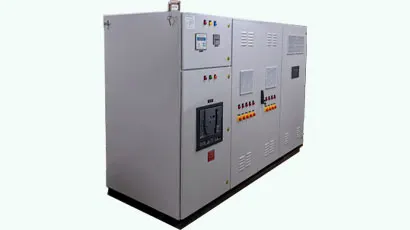


Influx Power is trusted APFC Panel Manufacturers in Pune. We are also renowned Suppliers and Service Providers in Pune. We deliver automatic power factor correction panels designed to improve electrical efficiency, manage reactive power, and support reliable industrial operations.
With 10+ years of experience and 5,000+ installations, we combine quality engineering, competitive pricing, and application-focused design. We provide customized solutions for industrial and commercial requirements, from system assessment and design to installation and support.
Our experienced electrical team delivers dependable products with practical performance, helping customers achieve better power utilization and long-term operating value.
What is APFC Control Panel?
An APFC control panel is an electrical panel that automatically manages reactive power by switching capacitor stages according to changing loads. It helps maintain a better power factor, reduces unnecessary current flow, and improves electrical system efficiency. APFC solutions are widely relevant in manufacturing, commercial buildings, infrastructure, and other facilities with inductive loads. An automatic power factor control panel performs this regulation automatically based on the electrical system's reactive power demand.
Types of APFC Panel
As APFC Panel Manufacturers in Pune, we offer a comprehensive range of APFC panels engineered to provide reliable, application-specific reactive power compensation for different electrical load conditions.
1. Contactor-Switched APFC Panel
Using electromechanical contactors, this APFC control panel connects or disconnects capacitor stages according to the reactive power demand of the electrical system. It offers a cost-effective power factor compensation panel solution for facilities where loads are comparatively stable or change gradually. An APFC panel with capacitor stages provides practical reactive power compensation for such applications.
2. Thyristor-Switched APFC Panel
With semiconductor-based switching technology, this automatic APFC panel provides rapid capacitor-stage operation without the mechanical movement of conventional contactors. Such fast response makes it suitable for welding machines, cranes, elevators and other applications requiring quick power factor correction.
3. Hybrid APFC Panel
Combining conventional capacitor stages with electronically switched steps, this solution can effectively manage both steady and rapidly changing reactive loads. The arrangement provides greater flexibility than a standard APFC capacitor panel when electrical demand varies frequently during operation. An APFC distribution panel can be configured to support such application-specific electrical distribution requirements.
4. Detuned APFC Panel
By incorporating series reactors with capacitor banks, this power factor correction panel helps reduce harmonic-related stress and minimize the possibility of resonance in the electrical network. It is well suited to facilities using VFDs, UPS systems, computers and other non-linear equipment that can influence a power factor correction system.
5. LT APFC Panel
Designed for low-voltage electrical networks, this solution is commonly installed in manufacturing units, commercial buildings and other facilities requiring automatic reactive-power management. It can be integrated with an LT electrical panel to support efficient low voltage power distribution and maintain an improved operating power factor. An APFC automatic panel can be configured for suitable LT applications based on system requirements.
6. HT APFC Panel
For high-voltage installations, this arrangement provides reactive-power compensation for large industrial and infrastructure applications operating at higher voltage levels. Depending on the project requirements, an APFC compensation panel can be engineered for systems such as 11 kV or 33 kV to support efficient electrical operation.
Technical Specifications of APFC Panel
As APFC Panel Suppliers in Pune, we provide panels with carefully selected electrical specifications and components to ensure dependable performance, safety and efficient power factor management.
| Specification | Details |
|---|---|
| Rated Voltage | 415V AC, 3-Phase, 4-Wire |
| Frequency | 50 Hz |
| Capacity | 10 kVAR to 2000+ kVAR, as per requirement |
| Controller | Microprocessor-based APFC controller with multiple stages |
| Capacitors | Heavy-duty, self-healing APP/MKP capacitors |
| Switching | Capacitor-duty contactors or thyristor switching |
| Busbar | High-conductivity Copper/Aluminium |
| Harmonic Protection | Detuned reactors available as required |
| CT Ratio | 1A or 5A secondary, selected as per load |
| Incomer Protection | MCCB / ACB |
| Stage Protection | HRC Fuse / MCB / MCCB |
| Metering | Voltage, Current, kW, kWh, kVAR, kVARh and Power Factor |
| Enclosure | Floor-mounted, free-standing steel construction |
| Protection Class | IP42 to IP54 |
| Ventilation | Natural or forced cooling |
| Cable Entry | Top or bottom entry |
| Operation | Automatic and manual modes |
| Customization | Capacity, stages, protection and configuration as per application |
Key Features of APFC Panel
As APFC Panel Service Providers in Pune, we deliver solutions equipped with practical control, protection and monitoring features designed for reliable operation across diverse industrial applications. Suitable APFC panel accessories can also be incorporated according to the required configuration and application.
1. Automatic Reactive Power Management:
The automatic power factor correction panel continuously monitors the electrical load and switches capacitor stages to maintain the required power factor.
2. Intelligent Controller Operation:
A smart controller enables accurate capacitor-stage switching and provides convenient monitoring of power factor and system conditions.
3. Harmonic Protection:
The APFC capacitor panel can be equipped with detuned reactors to provide safer operation in electrical systems with harmonic-producing loads.
4. Robust Industrial Construction:
The panel uses durable electrical components, sturdy enclosures and suitable protection arrangements for reliable performance in demanding environments.
5. Flexible Configuration:
Each APFC electrical panel can be customized for required kVAR capacity, switching stages, protection devices, metering and installation conditions.
Benefits of APFC Panel
As APFC Panel Suppliers in Pune, we provide solutions designed to improve electrical efficiency, optimize power distribution capacity and support dependable reactive power management.
1. Improved Power Factor:
Automatic compensation helps maintain a better power factor, supporting more efficient utilization of electrical power.
2. Reduced Power Losses:
A power factor improvement panel helps reduce unnecessary reactive current and associated losses within the electrical distribution network.
3. Better System Capacity:
Effective reactive-power compensation can help utilize available capacity in transformers, cables and other distribution equipment more efficiently.
4. Lower Operating Costs:
Improved electrical efficiency can help reduce avoidable power-factor-related charges and contribute to better overall energy management.
5. Reliable Load Management:
The power factor compensation panel automatically responds to changing load conditions, reducing the need for frequent manual adjustments.
Applications of APFC Panel
As leading provider of APFC Panel Services in Pune, we supply customized APFC solutions suitable for industries and facilities with varying inductive and reactive power requirements. Depending on the electrical design, a power factor control panel can be integrated into the facility's power management system.
1. Manufacturing Industries:
An APFC control panel helps manage reactive power generated by motors, pumps, compressors and production machinery in manufacturing plants.
2. Automobile Industries:
APFC correction panel supports efficient electrical operation for welding equipment, conveyors, machining systems and other motor-driven production loads.
3. Textile Industries:
The panel is suitable for spinning, weaving, processing and other textile operations where multiple inductive machines operate simultaneously.
4. Foundries and Engineering Plants:
A power factor correction panel helps compensate reactive power from heavy machinery, furnaces, motors and other industrial equipment.
5. Commercial Buildings:
It can be integrated into building electrical systems serving HVAC equipment, elevators, pumps, lighting and other variable loads.
6. Pharmaceutical Industries:
The system supports power factor management for manufacturing equipment, HVAC systems, pumps and essential plant utilities.
7. Infrastructure Projects:
An LT APFC panel can support efficient low-voltage power distribution in infrastructure facilities with significant inductive electrical loads.
8. Data Centers and Industrial Facilities:
Customized APFC solutions can help manage reactive power in facilities requiring stable, efficiently managed and continuously monitored electrical distribution.
Test Cases for APFC Panel
1. Visual Inspection:
Check the enclosure, component mounting, labels, wiring arrangement and overall panel condition before energization.
2. Wiring & Continuity Test:
Verify power and control wiring continuity, correct terminations and connections against the approved circuit diagram.
3. Insulation Resistance Test:
Check insulation resistance between phases and earth to confirm safe electrical isolation and insulation condition.
4. Earthing Verification:
Confirm proper earth continuity and secure earthing connections for the panel body and associated equipment.
5. Phase Sequence & CT Polarity Test:
Verify correct phase sequence and CT polarity to ensure accurate power factor measurement and controller operation.
6. Capacitor Step Switching Test:
Operate each capacitor stage individually in manual mode to confirm correct contactor, capacitor and indication performance.
7. Automatic Switching Test:
Apply changing load conditions and verify that the controller automatically adds or removes capacitor stages according to reactive power demand.
8. Power Factor Test:
Check whether the panel maintains the programmed power factor within the required operating range during representative load conditions.
9. Protection & Interlock Test:
Verify the operation of applicable fuses, breakers, alarms, trips, door interlocks and other safety protection features.
10. Thermal & Final Performance Test:
Run the panel under operating conditions and inspect capacitor banks, contactors, connections and busbars for abnormal heating before final commissioning.
For engineering documentation and fabrication requirements, an APFC panel autocad drawing can be prepared according to the finalized panel configuration and project specifications. Our automatic capacitor bank panel solutions can be customized according to specific load and power factor requirements.
Why Choose Us?
With over a decade of industry experience and thousands of successful installations, we understand diverse electrical requirements and deliver solutions designed for dependable field performance.
We use carefully selected components, robust construction and application-focused engineering to provide reliable APFC solutions for different industrial and commercial requirements.
We combine practical designs with cost-effective pricing and flexible configurations to deliver the right solution without unnecessary features or added costs.
Influx Power is prominent APFC Panel Manufacturers in Pune. We are also trusted Suppliers and Service Providers in Pune. We provide reliable APFC panel solutions designed to improve power factor, reduce electrical losses and support efficient power management. We combine quality engineering, competitive pricing and customized solutions to meet diverse industrial and commercial electrical requirements with dependable performance and long-term value. Connect with us for additional details.
FAQ's
1. What are the different types of APFC?
Common types include contactor-switched, thyristor-switched, hybrid, detuned, LT and HT APFC panels. The suitable type depends on load variation, voltage level and the presence of harmonics.
2. How to calculate kVAR for APFC panel?
The required capacitor capacity can be estimated using kVAR = kW × (tan φ1 − tan φ2), based on existing and target power factors. A proper load and power-quality assessment should be carried out before finalizing the panel capacity.
3. What is the standard for APFC panels?
APFC panels are generally designed and tested according to applicable electrical and panel standards, such as IEC 61439 and relevant capacitor standards. The exact requirements depend on the system voltage, installation conditions and project specifications.
4. How to select APFC panel rating?
Select the rating according to connected load, maximum demand, existing power factor, target power factor and required kVAR compensation. Load variation and harmonic levels should also be considered when choosing the panel configuration.
5. What is the working principle of APFC?
The controller continuously measures the system power factor and automatically switches capacitor stages according to reactive-power demand. Capacitor stages are added or removed as the load changes to maintain the desired power factor.
6. Where is APFC commonly used?
APFC panels are widely used in manufacturing plants, textile units, automobile industries, commercial buildings, foundries and infrastructure facilities. They are particularly useful where motors and other inductive loads create significant reactive-power demand.
7. How to install APFC panel?
Installation involves proper panel positioning, power and control connections, earthing, CT installation, phase-sequence verification and controller configuration. Commissioning should be performed by qualified electrical professionals according to the approved design and safety requirements.
8. What is SVG in APFC panel?
SVG, or Static Var Generator, is a power-electronic compensation device that provides fast and precise reactive-power compensation. It is particularly useful for rapidly changing loads where conventional capacitor-based APFC switching may not respond quickly enough.
9. Why is an APFC panel required?
An APFC panel is used to improve power factor, reduce reactive current and make better use of electrical distribution capacity. It can also help reduce power losses and power-factor-related charges while supporting efficient system operation.